Author: Yvonne Kawira

  • The Continuum of Protection: Pakistan’s Path to a Maternal RSV Vaccine

    The Continuum of Protection: Pakistan’s Path to a Maternal RSV Vaccine

    Professor Imran Nisar has spent more than thirteen years working at the intersection of epidemiology and paediatrics, an unusual vantage point from which to watch a country’s vaccine landscape evolve.  

    As Associate Professor (Research) and Vice Chair (Research) in the Department of Paediatrics and Child Health at Aga Khan University, his research has ranged across vaccine epidemiology, childhood pneumonia and early childhood development, work aimed squarely at generating the kind of evidence that low- and middle-income countries need to improve health outcomes.  

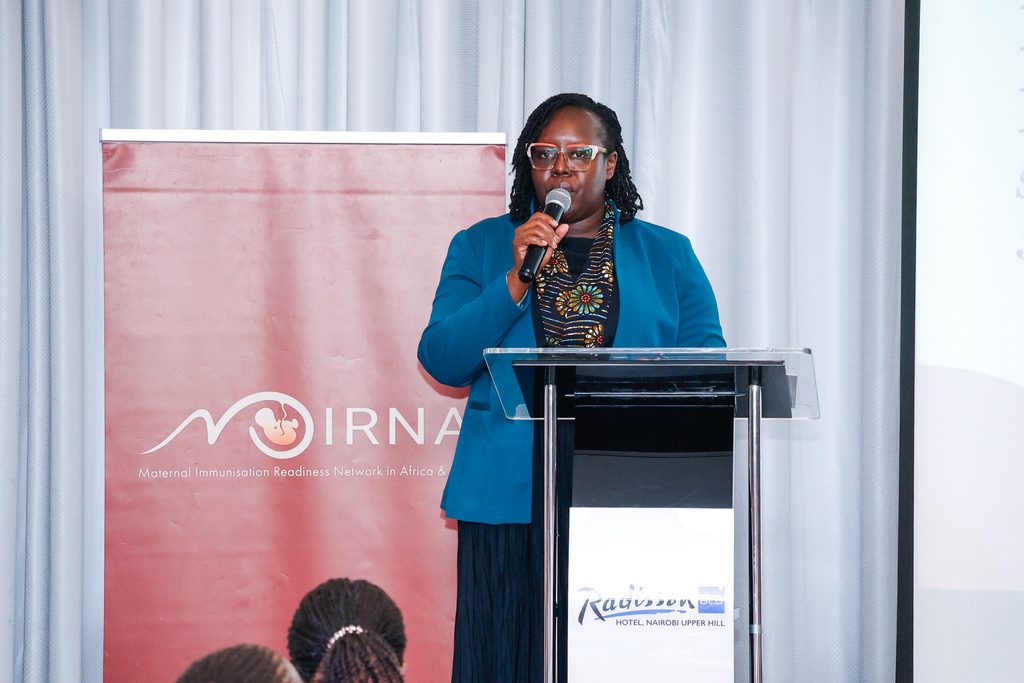
    Professor Imran Nisar Associate Professor (Research) and Vice Chair,Department of Paediatrics and Child Health at Aga Khan University. (Photo: Timon Abuna, WHM)

    Through his role in the Maternal Immunisation Readiness Network in Africa and Asia (MIRNA), he now helps steer Pakistan’s contribution to a question with continent-wide implications: is the country ready to introduce a maternal vaccine against respiratory syncytial virus (RSV)? 

    His answer, laid out with the precision of a researcher who has spent a career translating data into policy, is layered rather than simple. Pakistan has proof of principle already sitting inside its own immunisation history. What it lacks is the financing architecture, and in places the system integration, to build on that foundation. 

    Professor Nisar begins with an example that requires no persuasion, because Pakistan has already lived through it. “Maternal immunisation decreases the burden of neonatal morbidity and mortality,” he said. “For example, with the maternal tetanus vaccine, we have seen near elimination of tetanus cases in many parts of the world, including some provinces in Pakistan as well.” 

    That precedent, tetanus toxoid delivered to pregnant women, offers proof that maternal vaccination can work at scale in Pakistan’s health system. RSV, he argued, represents the next frontier of that same logic. “The new generation maternal vaccines like RSV have further potential to decrease respiratory illness in the first few months of life in newborns, through passive immunisation when given during pregnancy.” 

    Professor Nisar walked through the underlying biology in plain terms, and it is worth quoting at length because it explains why timing matters so much. “The way these vaccines work is that you vaccinate the mother during pregnancy, the mother produces adequate antibodies which are then passed on to the fetus, and then the newborn is protected for the first six months of life.” 

    That six-month window is not arbitrary. It corresponds precisely to the period when infants face the greatest danger from respiratory illness. “This is the period where they are most vulnerable, and respiratory infections are one of the leading causes of death,” he said. “Along with childhood vaccination, they can form a continuum of protection, beginning from the pregnancy period up to the first six months of life, where the child is more vulnerable.” 

    He sketched what that continuum could look like in practice, pairing a maternal RSV vaccine with existing childhood immunisation. “A combination of maternal and childhood vaccine, for example RSV vaccine given in the pregnancy period and pneumococcal vaccine given in the childhood infant period, provides overall protection against pneumonia and respiratory infections.” 

    Set against that promise, however, is a gap in what Pakistan’s Expanded Programme on Immunisation currently offers pregnant women. “There aren’t many maternal vaccines part of the EPI programme currently,” Professor Nisar said. “It’s only diphtheria and tetanus, which is given during the antenatal period. There was a COVID vaccine which was given during the pandemic times. Besides that, there are recommendations for other vaccines like influenza, but those are not part of the immunisation programmes.” 

    The consequence, he noted, is limited reach. “So the coverage is really low.” 

    In terms of introduction of a new maternal vaccine into the country’s EPI programme, Professor Nisar said that the biggest challenge at the moment was the financing part. 

    He situated that challenge within a shifting global funding landscape that is squeezing immunisation budgets across the region. “With the changing landscape of the Gavi financing mechanisms, where countries have faced significant budgetary cuts, introduction of any new vaccine is becoming a big challenge, because countries are at the moment trying to sustain their existing programmes.” 

    Public confidence, particularly around anything administered during pregnancy, carries its own weight. “There are aspects related to the safety and acceptance of the vaccine, especially when something is given during pregnancy. Is it safe for the unborn child or not? These are also some of the greatest aspects in relation to the introduction of a new vaccine.” 

    What MIRNA is actually building 

    Professor Nisar’s account of the consortium’s methodology reads almost like a checklist for how a country moves from uncertainty to an evidence-based decision. It starts with disease burden. “The way the MIRNA consortium is structured is that it’s trying to generate evidence, first of all, in terms of what is the overall burden of these infections in these priority countries. For example, what is the burden of RSV, how many hospitalisations does it cause, how many children die from RSV in the first six months of life.” 

    That burden data then feeds directly into a projection of impact. “That can then be translated to: if you have a highly effective vaccine, which we have, and scale it up to a good coverage, and multiply it by the effectiveness of the vaccine, how many hospitalisations and mortality can you prevent.” 

    From there, the analysis turns financial. “Then you can bring in the cost element of it, like what would be the potential cost of the introduction of the vaccine, and then also what would be the potential cost saved in terms of the illnesses averted or hospitalisations prevented.” 

    Health system readiness forms the next strand of MIRNA’s work, examining whether Pakistan’s facilities and platforms could actually deliver the vaccine once approved. “The other aspect we are looking at is health systems readiness. Are our health systems, the hospitals, ready for the introduction of a new maternal vaccine? Are the antenatal care systems and the EPI systems integrated with each other?” 

    Finally, the consortium turns to the people the vaccine is meant to protect. “Looking at it from the demand perspective as well, would a new maternal vaccine be acceptable to pregnant women, and what would be the factors that would be driving the acceptance of these vaccines?” 

    From evidence to decision 

    Every strand of that work, Professor Nisar explained, is designed to converge on a single outcome: giving Pakistan’s decision-makers something concrete to act on. “Eventually translating these into policy briefs, through which the stakeholders and policymakers can make informed decisions, based on both the burden perspective as well as the financial perspective.” 

    It is a methodical, unglamorous case, built from hospitalisation counts, cost projections and system audits rather than appeals to urgency alone. But for a researcher whose career has been defined by turning epidemiological data into practical health policy, that may be precisely the point. 

    Pakistan already has one maternal vaccine success story in tetanus. Whether RSV becomes the next chapter in that continuum of protection, in Professor Nisar’s telling, now rests less on scientific doubt than on financing and system readiness catching up with what the evidence already shows. 
  • Ethiopia’s Hidden Pneumonia Killer: Why RSV Deserves a Place in the Vaccine Schedule 

    Ethiopia’s Hidden Pneumonia Killer: Why RSV Deserves a Place in the Vaccine Schedule 

    For decades, Ethiopia has fought pneumonia with the tools it had. 

    These tools include using vaccines against pneumococcus, Haemophilus influenzae type B and measles, each rolled into the infant immunisation schedule at six, ten and fourteen weeks. Yet the disease remains the leading cause of illness and death among children under five in the country, claiming lives even as coverage of existing vaccines has climbed. 

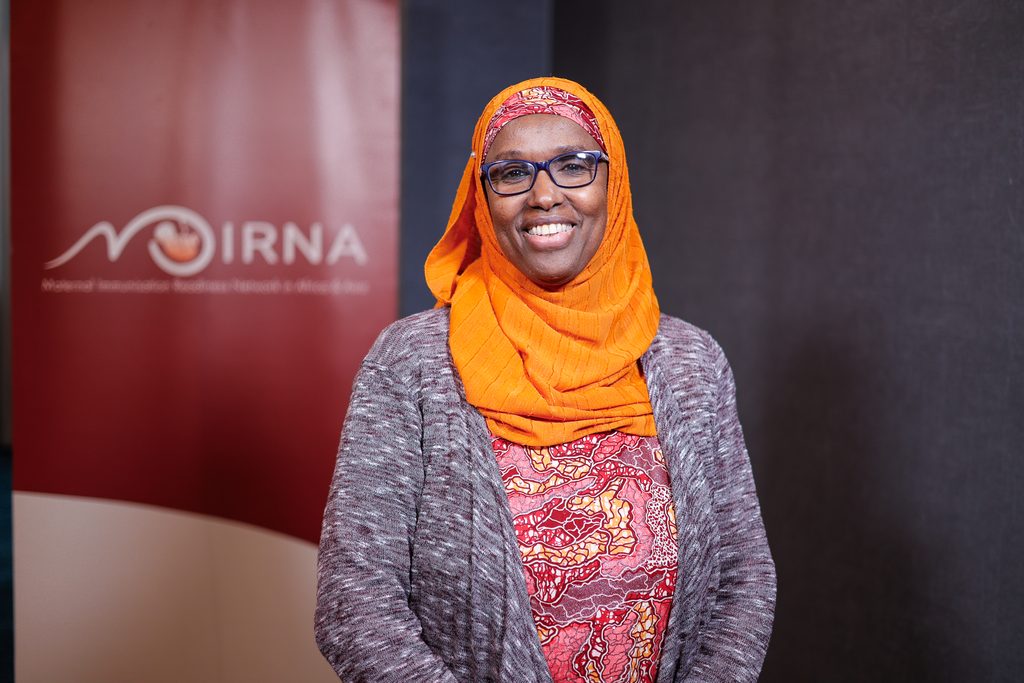
    Dr Bersabeh Mekasha Kassaye, a clinical researcher, physician and the Maternal Immunisation Readiness Network in Africa and Asia (MIRNA) manager in Ethiopia, believes she knows why. The country has been fighting the wrong shortlist of pathogens, or rather, an incomplete one. 

    –Dr Bersabeh Mekasha Kassaye, clinical researcher, MIRNA manager, Ethiopia. (Photo: Timon Abuna, WHM) 

    “Ethiopia, like many low- and middle-income countries, has battled with the fight against pneumonia for several years and decades,” she said. “Unfortunately, pneumonia is still the number one contributor to morbidity and mortality among under-five children in Ethiopia.” 

    The existing vaccine schedule targets three well-established culprits. Streptococcus pneumoniae is covered by PCV13. Haemophilus influenzae type B is addressed on the same dosing timeline. Measles, too, has long been recognised as a driver of childhood pneumonia and is covered accordingly. Despite this layered defence, pneumonia still accounts for roughly a fifth of childhood deaths in Ethiopia. 

    Dr Kassaye argues that respiratory syncytial virus, or RSV, is the missing piece. “It may not be that RSV is the number one cause contributing to pneumonia, but it is a major viral cause,” she explained. Crucially, a solution already exists elsewhere in the world. “What’s great is that now we have a vaccine for it.” 

    Two delivery routes have emerged internationally: a monoclonal antibody given directly to infants, and a maternal vaccine administered to pregnant women, with protective antibodies passed transplacentally to the fetus, shielding neonates and young infants during their most vulnerable weeks. Both approaches have already been introduced across several high-income countries. 

    For Ethiopia, Dr Kassaye is unambiguous about which route makes practical sense. “It is important that Ethiopia considers introducing a vaccine against RSV, and the most practical way for low- and middle-income countries like Ethiopia is the maternal RSV vaccine.” 

    The iceberg problem 

    If the case for a vaccine sounds strong, the evidence behind it is thinner than campaigners would like, and Dr Kassaye is candid about why. Diagnosing RSV reliably requires PCR testing, a costly and logistically demanding process that few Ethiopian facilities can sustain at scale. Cheaper rapid diagnostic tests exist, but they fall short of the gold standard. 

    The consequence is a fragmented and probably understated picture of the disease. “We don’t have a strong testing capacity for RSV,” she said. “So, we know the burden of RSV is the tip of the iceberg.” 

    What data does exist comes largely from sentinel surveillance sites rather than nationally representative studies, and the figures swing widely depending on season and setting. Estimates of RSV’s contribution to childhood pneumonia range from around 15 per cent up to 40 per cent during flu seasons. A pooled analysis conducted within MIRNA settled on roughly 16 percent of RSV-associated lower respiratory tract infections and around 21 percent of RSV-associated acute respiratory illnesses, figures Dr Kassaye  notes that “These don’t really represent the actual picture on the ground,” she cautioned. 

    That gap places Ethiopia in a familiar bind, one echoed across the wider MIRNA consortium. At the network’s Nairobi meeting, Ethiopian researchers presenting separate findings on group B streptococcus reached a strikingly similar verdict: there was enough evidence to flag a public health problem, but not yet enough to guide policy with full confidence. RSV, it seems, sits in the same uncomfortable middle ground, plausible, worrying, but insufficiently measured. 

    The strongest part of Dr Kassaye’s argument may be one that extends beyond RSV altogether. Protecting infants from RSV, she contends, does not simply reduce cases attributed directly to the virus. It appears to dampen pneumonia’s overall toll, across causes. 

    She pointed to a study published only the week before her interview, examining the effect of RSV monoclonal antibodies on invasive pneumococcal disease hospitalisation. The results showed a reduction of around 30 per cent, a figure that startled even those familiar with the field. Her explanation draws on a wider principle in respiratory medicine: viral infections frequently pave the way for secondary bacterial illness, so blocking the virus can blunt the bacterial threat that follows. 

    “A vaccine against RSV would not just decrease the healthcare burden and the economic burden associated with RSV, but also the burden associated with all-cause pneumonia and all-cause lower respiratory tract infection.” 

    Ethiopia’s predicament mirrors debates playing out across MIRNA’s nine member countries, from Bangladesh to Uganda, each wrestling with how to translate patchy local data into a case robust enough to persuade ministries and financiers. Kenya’s Kilifi site has produced what one expert at the Nairobi gathering called “phenomenal” RSV data, sufficiently strong that officials there barely need a systematic review to make their case. Ethiopia, by its own researchers’ admission, has further to go. 

    Professor Shabir Madhi of South Africa, addressing the same consortium, argued that RSV needs reframing in the public imagination much as pneumococcal vaccines once were, marketed not as protection against an obscure pathogen but as a defence against pneumonia itself, a killer every parent and minister instinctively understands. 

    Dr Kassaye’s account suggests Ethiopia is edging towards that same reframing. The testing infrastructure remains inadequate. The epidemiological picture is incomplete. But the underlying logic, that a widely available maternal vaccine could meaningfully reduce childhood deaths from the country’s biggest killer, is difficult to dismiss. 

    As she put it, a disease “claiming so many lives of children and infants and neonates” deserves every tool available, even one whose exact scale in Ethiopia is still being pieced together. 

  • Nigeria’s newborn deaths have barely moved in a decade. A maternal vaccine could help, if the country is ready

    Nigeria’s newborn deaths have barely moved in a decade. A maternal vaccine could help, if the country is ready

    Professor Hadiza Galadanci was the first female obstetrician trained in Nigeria’s Kano region, and she has spent close to four decades combining frontline clinical work with research that has shaped policy across West Africa.  

    She holds an MBBS from Ahmadu Bello University, a Master’s in Reproductive and Sexual Health Research from University College London, and fellowships of the West African College of Surgeons and the Royal College of Obstetricians and Gynaecologists in the United Kingdom. She has led the Nigerian arm of the Maternal Immunisation Readiness Network in Africa and Asia (MIRNA), and TIME magazine named her among the 100 most influential people in health in 2024. 

    –Professor Hadiza Galadanci, obstetrician MIRNA Lead Nigeria (Photo: Timon Abuna, WHM)

    Decades spent delivering babies alongside decades spent shaping the policies that decide whether those babies survive give her view of Nigeria’s neonatal mortality crisis its weight. 

    A decade of stalled progress 

    Professor Galadanci begins with the numbers. “Nigeria contributes a lot in terms of neonatal mortality,” she said. “Sometimes they say 41 per 1,000, sometimes 51 per 1,000.” What troubles her is how little the figure shifts. “Within the last almost a decade, we have not improved our neonatal mortality enough in Nigeria.” 

    The latest national survey supports her and a glance at the 2023-24 Nigeria Demographic and Health Survey puts neonatal mortality at 41 deaths per 1,000 live births, roughly one infant in 25 dying within the first month of life. That is almost unchanged from 39 per 1,000 five years earlier, even as under-five mortality fell from 132 to 110. The rate stood at 48 in the 2003 survey, so two decades have delivered a fall of seven points.  

    Kano, where Professor Galadanci trained, recorded the highest state neonatal mortality rate in the survey, at 59 per 1,000. Federal health officials accept the problem. The Ministry says 40 to 45 per cent of under-five deaths occur in the neonatal period, and has pointed to its Maternal and Neonatal Mortality Reduction Initiative and the Nigeria Child Survival Action Plan 2025 to 2029 as its response.  

    The causes, Professor Galadanci said, are well known. “The common causes of neonatal death are prematurity and then infections. One of the infections is lower respiratory tract infection, and RSV, respiratory syncytial virus, causes a lot of those.” 

    A vaccine within reach 

    Unlike prematurity, RSV now has a preventive tool. “Now we have a vaccine that you can give the mother. And if you give that mother that vaccine, then she is going to protect the baby.” 

    The science behind her optimism is recent because the vaccine, Abrysvo, is given as a single dose between 32 and 36 weeks of pregnancy, and the mother’s antibodies cross the placenta to protect the infant during the first six months of life. The World Health Organization has prequalified it, and that status lets Gavi and UNICEF procure it for eligible low- and lower-middle-income countries, where it had not previously been used. A recent review of randomised and real-world studies found substantial protection against infant RSV disease.  

    In her view, nothing matters more for preventing neonatal deaths than tackling RSV, and maternal immunisation can do it. 

    What MIRNA asks of a country 

    Professor Galadanci describes Maternal Immunisation Readiness Network in Africa and Asia (MIRNA)’s work as a sequence of questions that any country must answer before a new vaccine enters its schedule. 

    The first is burden. “Is the vaccine really addressing a disease that is of high burden? So we need to know what is the burden of RSV infection. And we have that from our maternal consortium work.” That evidence, drawn from MIRNA’s member countries, shows RSV to be a genuine driver of infant death and gives Nigeria’s National Immunisation Technical Advisory Group (NITAG) grounds to act. 

    The second is readiness. “Our readiness starts from policy. Do we have policies in place that can allow this vaccine to be introduced? Do we have funding for it? Do we have monitoring and evaluation for it? Do we have community awareness about it?” Every answer, she stressed, has to be found before rollout, not afterwards. 

    The third is cost. “What is the amount of money you need to introduce this vaccine, and is it really cost-effective? Because you can introduce a lot of money and at the end of the day it’s not cost-effective.” 

    Safety monitoring belongs in the same review. Another maternal RSV candidate, from GSK, was not taken forward after an imbalance in preterm births ended its trial early. Researchers have since modelled the possible trade-offs of preterm birth risk against deaths averted for Abrysvo in South Africa. Professor Galadanci did not raise this in her interview, but it shows why her insistence on monitoring and evaluation is more than a formality. 

    Carrying everyone along 

    No introduction succeeds on epidemiology and economics alone. “Who are the stakeholders? You need to make sure that you carry along all the right stakeholders, because if you miss any stakeholder, then you are in trouble.” 

    Her list reaches well beyond health officials. “The stakeholders are professional bodies, healthcare workers, policymakers, religious leaders, women’s groups. Even the patients, even parents of survivors, parents of babies that have been lost from RSV.” 

    Demand cannot be assumed once supply exists. “You can have the vaccine and then nobody comes to take it. So you need to know from the aspect of the women themselves, are they really ready to take this vaccine?” 

    The fix she returns to most forcefully is integration. In Nigeria, as in much of MIRNA’s membership, antenatal care and routine immunisation run on separate tracks. “Maternal care is usually given in an antenatal clinic, and then immunisation is given in what we call the expanded programme of immunisation. And these are two different programmes. Now we need to bring these programmes together.” 

    She sees this as the precondition for the vaccine reaching mothers at all. “In the antenatal clinic you can have vaccines as well, and whatever you need to do in EPI, you’re able to do it in the antenatal in terms of data collection and so on. So there must be integration, from the highest level of policy to integration at the level of service delivery.” 

    Professor Galadanci’s argument is that no baby should die of a preventable infection when a maternal vaccine exists. What distinguishes her account is its practicality. Burden, readiness, cost-effectiveness, stakeholders, demand and integration form a working list, and she can say which items Nigeria still has to tick off. 

    The national survey shows a rate of 41 per 1,000, that has held steady while child mortality overall has improved, and Kano’s 59 shows where the pressure is greatest. A vaccine alone will not close that gap, but a country that answers her questions honestly could make sure it is used well. 

  • The mother-in-law factor: what Kenya’s MIRNA data reveals about vaccine trust 

    The mother-in-law factor: what Kenya’s MIRNA data reveals about vaccine trust 

    If you want to understand why some maternal vaccines succeed and others stall before they’ve even begun, Dr Hellen Barsosio has a starting point that might surprise you.  

    Dr Barsosio a Principal Clinical Research Scientist at the Kenya Medical Research Institute (KEMRI), working alongside the Liverpool School of Tropical Medicine.  

    She also leads Kenya’s arm of the Maternal Immunisation Readiness Network in Africa and Asia (MIRNA) a nine-country consortium preparing health systems for the introduction of new maternal vaccines. Across those nine countries, one theme keeps resurfacing, a pregnant woman rarely makes a vaccination decision alone. 

    For a moment, think about a pregnant mother’s mother-in-law, she said. 

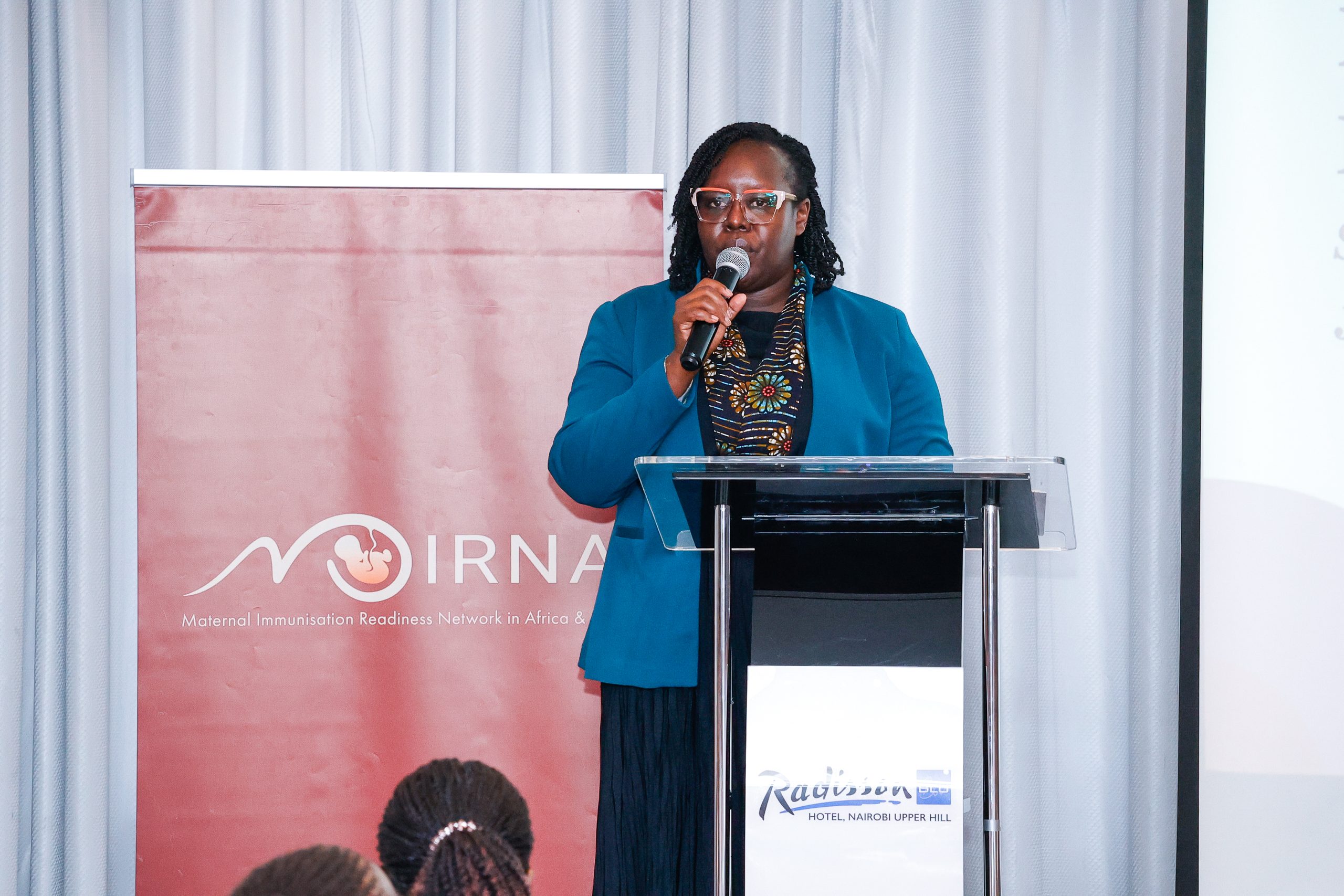
    –Dr Hellen Barsosio, Principal Clinical Research Scientist (KEMRI), MIRNA lead, Kenya. (Photo: Timon Abuna, WHM)

    “So, for the members, let their spouses know, their mothers-in-law, their grandmoms that’s how you build trust,” she says. It’s a deceptively simple instruction, but it reframes the entire demand-generation problem. A leaflet handed to a pregnant woman in a clinic waiting room reaches one person. A husband, a mother-in-law and a grandmother who understand and support the vaccine reach the household and, by extension, the wider social network that shapes what that household considers normal and safe. 

    Behind that observation sits a body of evidence that Dr Barsosio describes as remarkably consistent.  

    “That’s the clearest evidence that has come from, more than the last five years of new maternal vaccine studies before MIRNA, from ours that women are more likely to take a vaccine if it’s explained to them by a healthcare provider.” It’s a finding echoed by WHO’s own Behavioural and Social Drivers of Vaccination (BeSD) framework, developed with the Strategic Advisory Group of Experts on Immunisation, which repeatedly identifies health workers as among the most trusted sources of information on immunisation anywhere in the world and a provider’s recommendation as one of the single biggest levers on a caregiver’s decision.

    But that finding, Dr Barsosio argues, cuts both ways. If trust in the provider is what moves the needle, then building that trust “also means educating providers and supporting providers.” A vaccine demand strategy that pours resources into public messaging while leaving frontline nurses under-informed is building on sand. 

    This is where Dr Barsosio identifies what she calls the consortium’s central bottleneck. “Our biggest bottleneck at the moment is how knowledge not only the policy knowledge itself, but the knowledge about the vaccine trickling down to providers sometimes takes too long.” And that lag is not a neutral delay. “That knowledge gap and space gap then creates room for misinformation.” 

    It is a dynamic familiar from Kenya’s own MIRNA health-system readiness data, where facility-level assessments found that immunisation staff typically receive training on childhood vaccines but nothing dedicated to maternal immunisation specifically, leaving inconsistent knowledge of vaccine safety even among vaccinators themselves. The same gap has been documented well beyond Kenya, a systematic review of pre-service immunisation training found that most of the available evidence on preparing health workers for vaccination comes from high-income settings, with far less known about how nurses and vaccinators in lower-resourced systems are, or aren’t, being equipped before they ever see a patient. 

    Dr Barsosio’s proposed fix is to start earlier and start now. “If we know we have new maternal vaccines on the horizon, let’s introduce it in the curriculums right now in nursing schools, in medical schools. They come out knowing about it.” She said adding that: “So when it’s implemented, say two years or five years down the pipeline, they’ll know about it.” 

    Kenya has already piloted precisely this approach with routine childhood immunisation. Kenya Medical Training College, working with WHO’s Regional Office for Africa and international partners, revised its nursing and midwifery curricula to build immunisation content directly into pre-service training, using prototype curricula that WHO first developed for the African region and updated in 2015. The rationale is what Dr Barsosio applies to maternal vaccines now which she says is far easier to graduate a workforce that already understands a new vaccine than to retrain one after the fact, under pressure, once a rollout is already under way. 

    Even a well-trained provider, though, runs into a second, more mundane obstacle, time. “Empower the nurses,” Dr Barsosio says. “Our clinics are really full. I think we’ve heard from some of our health systems data you have one nurse who delivers all of these interventions. She’s overworked, meaning that time for counselling is quite thin.” 

    That single overstretched nurse is a recurring image across MIRNA’s country findings from Kenya’s own facility assessments to Burkina Faso’s account of ANC sessions so overcrowded that “on vaccination day they don’t have time to answer your questions.” However strong a provider’s knowledge, Dr Barsosio’s point is that knowledge cannot substitute for the minutes required to actually deliver it. 

    Her solution is to widen the circle of trusted messengers rather than pile more onto the same nurse. “It could be a group talk before the beginning of services at the day. It could be supplementing support like using lay healthcare workers, like community health volunteers or community health promoters to be able to supplement how that information is delivered, with the support of nurses, for instance, or support of vaccinators.” 

    WHO views task-shifting more broadly as a viable way of improving healthcare coverage by making fuller use of the workforce that already exists, and community health workers have been shown, in settings from Malawi to Burkina Faso, to take on real demand-generation duties running health talks, mobilising communities, fielding questions and dispelling myths precisely the counselling load that would otherwise fall entirely on a single vaccinator.  

    As Dr Barsosio puts it, the goal is simply “building the pool of more trusted sources who can give this information.” 

    Vaccine confidence in Bangladesh, Kenya, Nigeria and everywhere else MIRNA has looked is manufactured through campaigns and also inherited through relationships between a woman and her mother-in-law, between a patient and a nurse she has known for years, between a health system and the public it has or hasn’t earned the confidence of.  

    Dr Barsosio’s contribution is to insist that none of those relationships can be left to chance. Providers must be taught early, supported properly, and given the time, or the reinforcements, to actually talk to the women in front of them. Get that right, she suggests, and the mothers-in-law and grandmothers will follow.