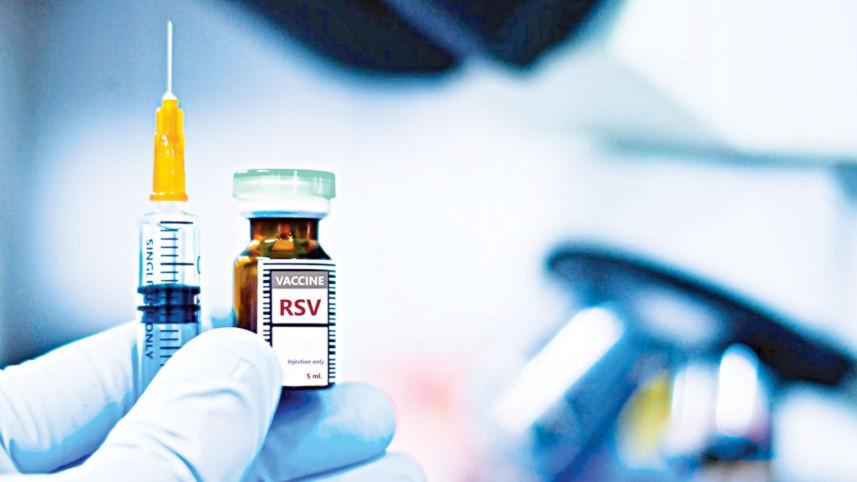
Every year, Respiratory Syncytial Virus (RSV) fills paediatric wards with babies who struggle to breathe, but now a vaccine that protects them before birth is now licensed in Kenya.
At the Annual Scientific Congress of the Association of Progressive Obstetricians and Gynaecologists Kenya (APOG-K) in Nairobi, a panel of paediatric, obstetric and midwifery experts set out what is known about the disease, why the vaccine matters, and what must be in place before it reaches a pregnant woman through the public system.
A common virus with serious consequences
Dr. Joseph Kariuki Mbuthia, a consultant paediatrician and paediatric infectious disease specialist, opened with a local study published in January. It reviewed children admitted with acute viral respiratory infections in the population his colleagues treat. Rhinovirus and coronavirus featured prominently, but RSV was a close contender and, in his words, caused the most severe disease.
“It’s with us,” he said.
By the age of two, he explained, most children will have met the virus. It is highly infectious, and immunity does not last, so reinfections are common though usually milder. The virus enters through the lining of the nose, infects neighbouring cells and spreads down the airways towards the smaller passages of the lungs.
Signs of RSV
A child may begin with a runny nose, then develop a fever and a falling appetite. Within a day or two, breathing becomes laboured, with fast breathing and chest indrawing. In severe cases, oxygen levels fall.
Globally, RSV accounts for about 3.6 million hospitalisations a year and almost 100,000 deaths, Dr Mbuthia said. The great majority of those deaths occur in low and middle-income countries. “It has a high burden and a high mortality,” he said. “It’s a critical disease.”
In Kenya, he noted, the virus circulates through much of the year, with one peak from September to February and another around the April rains. In high-income countries, by contrast, it is mainly a winter illness.
Who is most at risk
According to Dr Mbuthia, premature infants fare worst with figures showing that among babies born between 29 and 35 weeks, admission to intensive care is common, and about 20 per cent need mechanical ventilation. Among preterm babies who catch the virus at around three months, as many as 70 per cent may need intensive care and nearly half may need a ventilator.
Babies with chronic conditions, including congenital heart disease, cancer and, in Kenya, sickle cell disease, are also vulnerable.
Exposure plays a part as well because risk rises for babies placed in childcare centres while their mothers work, for those with older siblings who bring infections home from school, and for those living with cigarette smoke or other pollutants. Babies breastfed for only a short time are more exposed, because breast milk is protective.
Mortality in otherwise healthy children is below 1 per cent. Among the highest-risk groups, particularly premature babies, it can reach 35 per cent. Severe cases may require a hospital stay of up to a week.
Dr Mbuthia told delegates that children who have had RSV face a higher risk of asthma, nasal allergy and other chronic respiratory conditions, and that some carry asthma into later life.
Why the vaccine is given to mothers
The logic of the vaccine rests on antibodies, so a mother with good immunity passes protective antibodies to her baby across the placenta. Dr Mbuthia pointed out that infants born with high levels of maternal antibodies tend to have milder disease and fewer respiratory complications.
The vaccine targets a fusion protein on the surface of the virus, which the virus uses to invade cells and to spread between them. A woman who receives it late in pregnancy builds antibodies that her baby inherits at birth, covering the first months of life, when the infant’s lungs are smallest and the risk is greatest.
The vaccine is licensed in Kenya for women from 28 weeks of pregnancy, in the third trimester.
Dr Nelly Bosire, an obstetrician and gynaecologist who sits on the congress organising committee, said the licence is already in place. “It just hasn’t come yet,” she told the audience. “We hope that the private sector can introduce it so that we keep going while we wait for government to get started.”
Behind the scenes, she said, the Ministry of Health is in advanced discussions about adding the vaccine to the national immunisation programme alongside tetanus-diphtheria (Td), which is given to pregnant women to protect against tetanus and diphtheria.
The Kenyan discussion takes place within an established international position. In May 2025, the World Health Organization (WHO) published its first position paper on immunisation products to protect infants against RSV, which it describes as the leading cause of acute lower respiratory infections in children worldwide.
The paper recommends that all countries introduce either the maternal vaccine, RSVpreF, or the long-acting monoclonal antibody nirsevimab, with the choice depending on feasibility within each country’s health system, cost-effectiveness and expected coverage. The antibody is given to the infant rather than the mother. For Kenya, that makes the choice of product part of the policy decision still to come.
On timing, WHO advises giving the maternal vaccine in the third trimester, from week 28 onwards, so that antibodies transfer adequately to the baby. That matches the window described by Dr Bosire. WHO has also taken steps on supply: the maternal vaccine received WHO prequalification in March 2025, which allows United Nations agencies to purchase it.
A 2025 Kenyan study of maternal RSV vaccination attitudes, citing clinical trial data, notes that the vaccine showed about 70 per cent efficacy against severe RSV lower respiratory infection in the first six months of life, and above 80 per cent in the first 90 days. By WHO’s vaccine safety advisers’ account, the vaccine is authorised in more than 40 countries, with differing limits on the gestational age at which it can be given.
WHO attaches an expectation that matters for Kenya’s record-keeping. It advises that rollout be accompanied by safety monitoring, particularly of birth outcomes among vaccinated pregnant women, beginning before or at the time of introduction. Its vaccine safety committee has also recommended guidance on collecting data from pregnant women, including vaccination status, so that surveillance works without overburdening health workers. Countries that have moved first are already doing this. Argentina, for instance, planned to monitor the vaccine’s safety during its use in the season under review.
Delivering these recommendations depends on health systems that can identify who was vaccinated and when. As Dr Bosire told the congress in a separate session, much antenatal care in private clinics never reaches the national data.
With all the progress made, no policy yet exists on who should receive the vaccine. Dr Mbuthia suggested a starting point. “Mothers with high-risk pregnancies would be good candidates,” he said, once the vaccine becomes available. Babies born preterm, or with abnormalities such as congenital heart disease, would be priorities for protection too.
He raised a further policy point saying that RSV is also dangerous at the other end of life, for adults over 65 with other illnesses and for those over 75, and vaccines exist for those age groups. “It should be for the two extremes in the age groups,” he said, urging policy-makers to consider older people early.
Moderator questions pressed the panel on evidence gaps. Dr Joyce Nyerere, a researcher whose work on RSV spans some 15 years and who works with the Ministry of Health and partners, said recent investigations had generated evidence feeding into policy decisions on whether Kenya will adopt the vaccine.
Dr Mbuthia explained that confirming RSV requires a PCR test on a nasal swab, usually as part of a multiplex respiratory panel. In practice, clinicians suspect RSV when an infant under two has fever, wheeze and fast breathing after a few days of cold symptoms, especially if siblings are also unwell.
“We don’t have any antiviral treatment for it,” he said. Care consists of supporting the baby while the illness runs its course, with oxygen delivered by whichever method the child requires.
Without cheaper testing, the true burden remains partly hidden, which complicates the economic case for vaccination.
The people who will ultimately deliver the vaccine are the nurses and midwives who staff antenatal clinics. Julie Nyamao, a certified midwife and doctoral candidate at the University of Nairobi, shared findings from interviews with health workers and focus groups with women across five public facilities and one private facility.
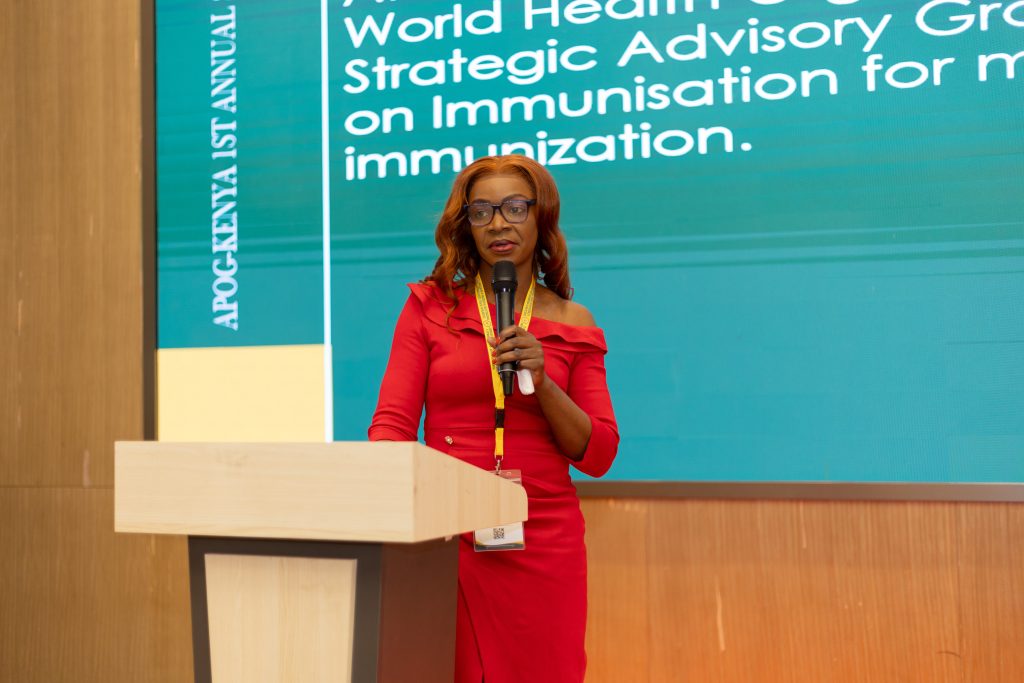
There is a knowledge gap, she said, among both providers and mothers. Mothers know what a tetanus injection is. Few know what RSV is.
“We need to give them the information they require so that we do not give any rumours any space,” she said, urging that frontline staff be trained before launch. She called for stronger counselling at clinics so women can plan their visits to fall within the third-trimester window, and for clear guidance on women with other health conditions so that providers and mothers alike “feel safe, feel protected”.
Her research also catalogued the beliefs that complicate uptake of maternal vaccines. Some women fear that vaccines are a hidden form of family planning or can cause miscarriage. Fears around COVID-19 vaccines, including worries about deformity and sterility, lingered. Husbands and religious leaders sometimes limited women’s access to clinics.
Practical obstacles loom as well. Maternal and child health clinics often open only between 8am and noon or 1pm. Stock-outs mean repeat trips. Women who are not registered under the Social Health Authority face upfront payments.
A Kenyan survey of 400 pregnant and lactating women in Nakuru and Mombasa counties adds context. It found nearly one in four participants were “questioners”, and its authors argue that this group can be reached through tailored health promotion that supports confident decisions. The same study lists affordability, availability, delivery platforms for pregnant women, RSV seasonality and vaccine hesitancy among the main challenges.
Asked what she would prioritise if appointed to lead RSV introduction, Dr Bosire pointed to Argentina, now in its third year of implementation. What worked, she said, was backing from the top, with the health minister personally involved, and heavy investment in information, first for health workers and then for communities.
“People don’t recommend what they don’t know,” she said.
Evidence from the United States supports the point. In the first season after recommendations were issued there, coverage of the maternal RSV vaccine among eligible pregnant women was 32.6 per cent, and receiving a provider’s recommendation was strongly associated with vaccination.
Communication, in Dr Bosire’s view, must begin early. Kenyan patients are curious and willing to decide for themselves. When they distrust advice, they leave. Social media, as the HPV vaccine experience showed, can amplify doubts within days.
Health economists, she said, are working out what Kenya would save by vaccinating every pregnant woman, including the cost of intensive care and ventilation that paediatricians such as Dr Mbuthia would otherwise provide. She framed vaccination in historic terms. “I think vaccination is the single most effective technology we have had in the last 50 years,” she said, adding that only penicillin is likely to rival it. With antimicrobial resistance rising, she argued, the investment case is stronger still.